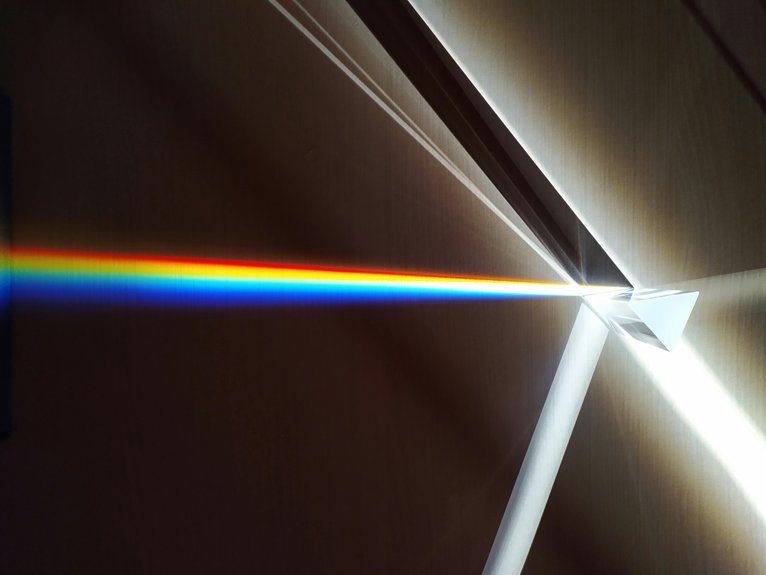
The Fusion Prism 967811287 Apex Beam presents a controlled prismatic architecture designed for precise dispersion and uniform interfaces. It aims to reduce color fringing while preserving spectral stability and high light quality across varying conditions. Real-world demonstrations include laser synthesis, high-resolution microscopy, and rapid optical communications, signaling broad applicability. The system emphasizes adaptive tuning and durability, offering seamless integration. Yet questions remain about how its tuning mechanisms perform under extreme environments and long-term use.
What Makes the Fusion Prism Apex Beam Stand Out
The Fusion Prism Apex Beam distinguishes itself through a combination of precision engineering and practical performance characteristics.
Fusion Prism delivers consistent output with tight tolerances, ensuring repeatable results.
Its Apex Beam design reduces stray light while maximizing efficiency.
Prismatic Architecture enables controlled dispersion, and Light Quality remains high across variables, supporting clear visibility and freedom in creative applications.
How the Prismatic Architecture Enhances Light Quality
The prismatic architecture directs light through a precise sequence of facets and interfaces, shaping dispersion and minimizing aberrations.
By guiding rays with controlled interfaces, it reduces color fringing and maintains uniform intensity.
This approach sustains prismatic efficiency and spectral stability, enabling dependable performance while preserving freedom in design exploration and scientific inquiry.
Clear, evidence-based refinement supports adaptable, accessible optics.
Real-World Applications: Laser Synthesis, Microscopy, and Communications
Real-world deployments of the prism-based apex beam system demonstrate its versatility across laser synthesis, high-resolution microscopy, and rapid optical communications.
The approach shows consistent performance in controlled settings, enabling repeatable material modification while preserving sample integrity.
In microscopy, microscopy resilience supports durable imaging under variable illumination.
Communications benefit from stable beam delivery, with predictable dispersion control and scalable integration for future photonic networks.
Adaptive Tuning, Durability, and Seamless Integration in Practice
The analysis shows adaptive tuning enables rapid optimization; durability ensures reliable operation across temperatures and wear; seamless integration minimizes reconfigurations, enabling researchers to pursue ambitious goals with confidence.
Evidence supports practical viability and flexible deployment in diverse contexts.
Conclusion
The Fusion Prism Apex Beam closes the spectrum with a harbor of light, where each ray threads through precise facets like a needle through glass. Its prismatic core disperses without distraction, painting crisp edges and uniform hues across variables. In practice, adaptive tuning, rugged design, and seamless integration weave a steady tapestry of performance—from laser synthesis to microscopy and rapid communications—each application glowing with reliability, clarity, and enduring spectral stability.